
You know that photograph you keep meaning to print? The one you love enough to show people, but somehow it's still living on your phone between a screenshot and a picture of what you had for lunch? Let's give it a better address.
I'm a photographer, so you can probably guess where I stand on this. When we've put thought into your clothing, the lighting, and how you want to be photographed, I want you to actually enjoy the result. A framed print lets you do that every time you walk into the room. It might be your family laughing together, your senior looking more grown-up than you're quite prepared for, or a boudoir portrait that makes you think, "Yes. That's me." Those photographs deserve somewhere you'll see them.
Choose the Photograph You Keep Coming Back To
The most formal image doesn't automatically get the wall. Everyone looking at the camera can make a beautiful family portrait. So can the image where your child is leaning into you and someone has completely lost their composure laughing. If that second photograph feels more like your family, give it serious consideration.
When you're choosing, pay attention to which image you return to after you've looked through everything else. What holds you there? An expression? The way someone's hand rests on your shoulder? A version of yourself you hadn't quite seen before?
With a beauty or boudoir portrait, you might love the shape of the pose or the way the light falls across your skin. You're allowed to choose something bold. You're also allowed to hang it in your bedroom, where enjoying it doesn't require a conversation with every guest who visits.
Start with the photograph you love, then figure out where it belongs.
Your Wall Can Handle Something Bigger
An 8x10 has its place. Above a wide sofa, all by itself... it's going to look a little stranded.
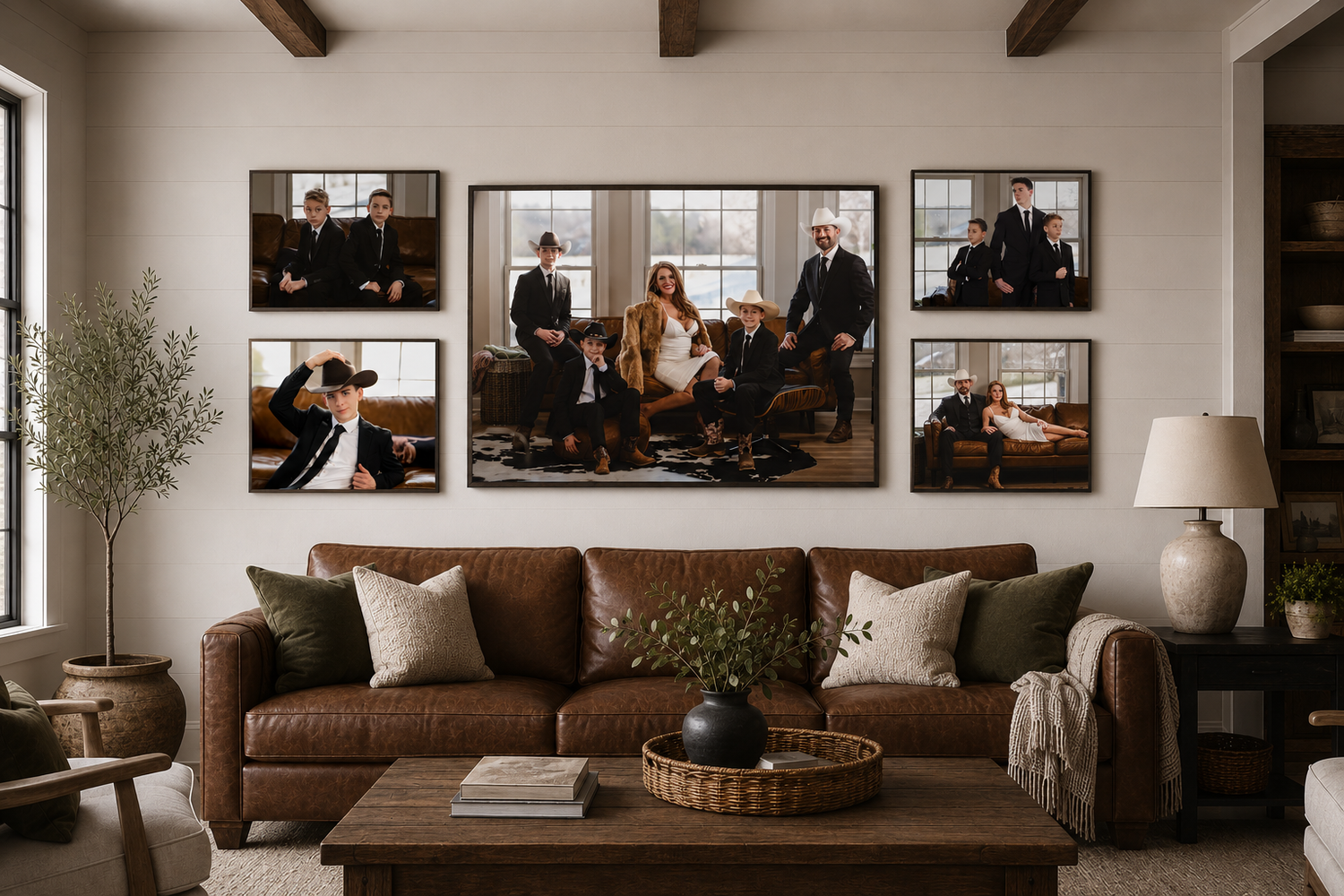
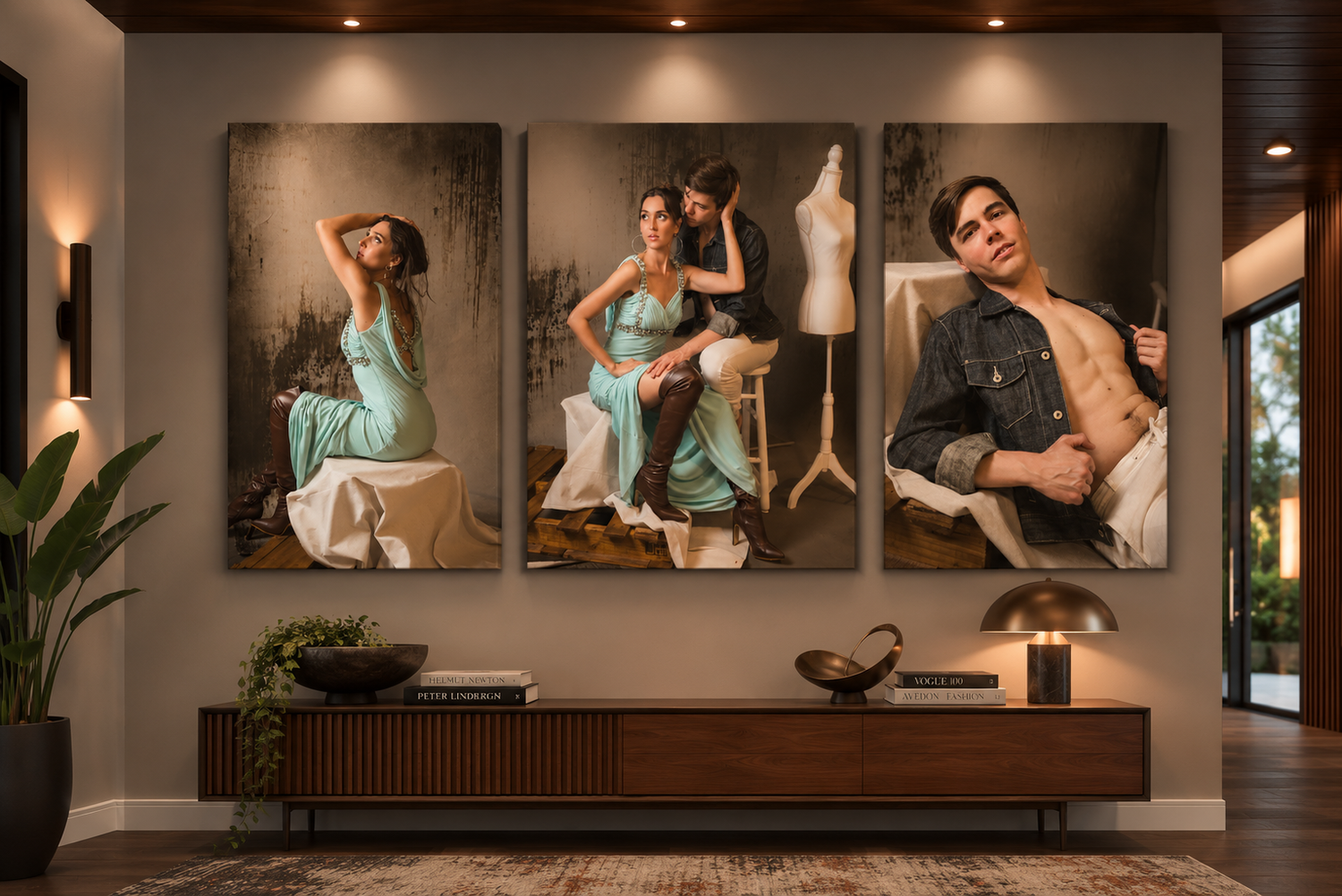
Scale changes how a photograph feels in a room. A small framed print on a bedside table invites you to look closely. A larger portrait lets you appreciate the expression and details from across the room. For artwork above furniture, roughly two-thirds to three-quarters of the furniture's width is a useful starting point. That measurement includes the frame, or the full arrangement if you're hanging several pieces. You can adjust from there based on the room.
Before committing, use painter's tape or paper templates to mark the proposed size on the wall. Then step back to where you'd normally sit or stand. It's much easier to judge scale that way than by holding a tape measure and trying to imagine the rest.
Pick a Frame That Works With the Image
I like a frame that gives a photograph a finished look without demanding all the attention.
Natural wood brings warmth to family portraits and rooms with softer textures. Black gives an image a crisp edge, especially when the photograph has strong shadows or graphic lines. A restrained metallic finish can work beautifully when you want a little polish. A mat gives the image breathing room. Going without one can feel cleaner and more immediate. Neither choice needs to become a personality test. Look at the photograph, the frame, and the room together.
The same goes for color versus black and white. If the colors are part of what you love, keep them. If expression and gesture carry the photograph, black and white may suit it beautifully. You don't have to turn everything monochrome to make a display feel considered.
Pay Attention to What Protects the Print
The materials behind the finished piece matter, too. Archival printing, acid-free mats, and quality backing help protect the photograph over time. UV-protective glazing is useful in rooms with natural light, though you'll still want to keep artwork out of direct sunlight when possible.
Ask about those details when you're choosing your framed prints. A frame can look lovely from the front while the materials inside deserve a closer look.
Give a Gallery Wall Somewhere to Begin
If you love several photographs, build around one larger piece and let the smaller frames support it. Different sizes give the arrangement some movement. Lay everything out on the floor first, or use paper templates on the wall. Keep the gaps reasonably consistent; about two to three inches is a good starting point. Group the photographs closely enough that they feel connected, and leave space around the outside if you'd like to add more later.
You don't have to fill the whole wall this year. Families grow. There'll be other photographs worth making room for.
Print the One You've Been Putting Off
A digital gallery is convenient, but opening it takes an extra step. The photograph hanging in your hallway is already there when you come home.
At ali almazar Photography, choosing artwork is part of the portrait experience. During your Reveal + Ordering appointment, we can talk through which photographs you want to live with and how you'd like to display them. And please don't feel you need a perfectly decorated house first. Pick the photograph you keep going back to. We'll work out the frame.