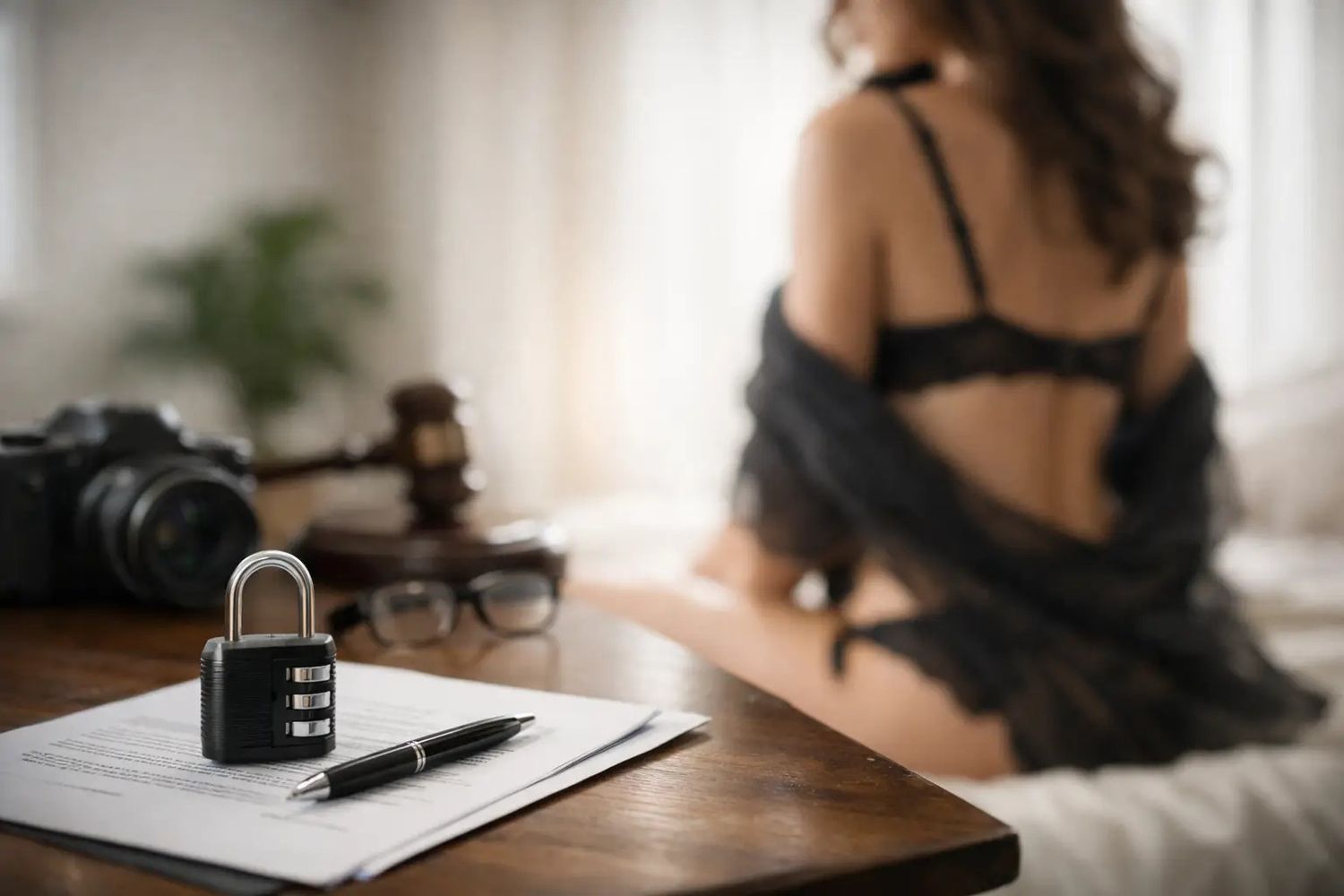
A boudoir session asks you to be seen with honesty, courage, and a little bit of delicious defiance. That is precisely why boudoir privacy policies are not a fine-print detail. They are part of the experience itself. Before you choose lingerie, book a date, or step in front of the camera, you deserve to know exactly who will see your images, how they will be stored, and what control you have over every form of sharing.
Privacy should never feel like a favor a client has to request. It should be the starting point for a dignified, confidence-building portrait experience.
Why Boudoir Privacy Policies Matter
Boudoir photography can mark a turning point: a wedding-day gift, a milestone birthday, a season of rebuilding, a celebration of strength, or simply the choice to take up space in your own life. The photographs may be intimate, but the decision to create them is deeply personal. A thoughtful privacy policy honors both truths.
The right photographer does more than create flattering images. They create conditions where you can relax. When expectations around privacy are clear before the session, you are free to focus on how you want to feel rather than wondering whether an image might appear somewhere you did not expect.
This matters for every client, including people who are public-facing professionals, parents, newly single, married, in transition, or simply private by nature. There is no single reason someone wants discretion, and there does not need to be. Your boundaries are enough.
What a Clear Boudoir Privacy Policy Should Cover
A strong policy is specific, understandable, and discussed before the camera comes out. Vague promises such as “your photos are safe with us” may sound reassuring, but they do not answer the questions that matter most.
Consent for Portfolio and Social Media Use
First, ask whether images are ever used in a photographer’s website, social channels, print materials, education, competitions, or studio samples. If the answer is yes, the policy should explain how permission is obtained.
The healthiest standard is opt-in consent. In other words, your images remain private unless you actively agree to allow specific images to be shared. A signed model release should not be hidden inside a broad contract or presented as an assumed requirement of booking a session.
You should also be able to limit your permission. Perhaps you are comfortable with an anonymous close-up but not your face. Maybe you approve a print sample inside a private studio but do not want social media use. Or you may want nothing shared at all. Consent can be generous, limited, or withheld entirely. Each choice is valid.
If you do grant permission, ask whether you can review the selected images first. A collaborative approval process protects your comfort and preserves the intention behind your session.
Who Can Access Your Images
Ask who, beyond the photographer, may have access to your photographs. Depending on the studio, this could include a retoucher, studio manager, associate photographer, album designer, or print lab. There is nothing inherently concerning about a trusted professional workflow, but you deserve transparency.
A professional answer explains both the people involved and the reason they need access. It should also address whether those individuals are bound by confidentiality expectations. You should never have to guess whether your gallery is being viewed, discussed, or transferred outside the team responsible for delivering your finished artwork.
For many clients, an in-person reveal or a private ordering appointment feels especially comfortable. It offers a more personal setting to select favorites, consider a portfolio box or fine-art print, and decide how your images will live in your home. For others, a password-protected online gallery is the better fit. Privacy is not one-size-fits-all. The point is having a choice that feels secure to you.
Gallery Security and Download Controls
Online galleries are convenient, but convenience should not mean casual access. Ask whether the gallery is password protected, how long it stays active, and whether downloads are enabled. Also ask whether the photographer can restrict downloading, sharing, or direct printing if that better supports your wishes.
A password is only as private as the people with whom it is shared, so consider where and how you will store it. If the session is a surprise gift, use an email account and device your recipient does not access. Small details can protect a meaningful surprise.
It is also wise to ask what happens after the gallery expires. Some studios archive images for a period of time, while others remove them according to a defined schedule. Neither approach is automatically better. What matters is that the timeline is communicated clearly, and that you know whether purchasing archival files or finished artwork is part of your preservation plan.
Image Storage, Retention, and Deletion
Digital files do not disappear simply because a gallery link expires. A responsible policy should distinguish between client-facing gallery access and the studio’s internal archive. Ask where images are stored, whether storage is encrypted or otherwise protected, and how long originals and edited files are retained.
You may also want to ask about deletion. Can you request that unpurchased proofs be removed after ordering? Can final images be deleted after a stated retention period? Are there practical limits, such as backups that cycle out on a schedule rather than immediately? Honest answers matter more than absolute-sounding guarantees.
There is a trade-off worth considering. Long-term archiving can be valuable if you later want to reorder an heirloom album, replace a lost print, or return to images that remind you of a powerful chapter. At the same time, some clients feel best knowing their files will not be held indefinitely. A client-centered studio will respect either preference and document the decision.
Questions Worth Asking Before You Book
You do not need to be an expert in contracts to advocate for yourself. During a consultation, direct questions are appropriate and welcome. Ask whether sharing is opt-in or opt-out, whether you may choose specific approved images, who can access your files, how galleries are protected, and when files are deleted or archived.
Also ask what happens if your circumstances change. You may have initially agreed to image sharing and later take a new job, enter a different relationship, or simply decide that public visibility no longer feels right. Policies vary, especially when an image has already been printed or published, but a respectful photographer will explain what can be changed and what cannot.
Pay attention to how the conversation feels. Clear, unhurried answers are a good sign. Pressure to sign a release, dismissive language about privacy, or uncertainty about storage practices deserve a pause. Intimacy in portraiture requires trust. Trust is built through consistency, not charm alone.
Your Privacy Choices Can Be Part of the Creative Process
Privacy and artistry do not compete. In fact, defined boundaries often create more freedom. When you know an image is for your eyes only, you may feel more open to creating something bold, tender, sensual, or unexpected. When you choose to share a photograph, it can become an act of visibility on your own terms.
At unButtoned, the spirit of boudoir is not about performing for an audience. It is about making room for your own confidence, complexity, and beauty. Whether your images become a private keepsake, a gift for someone you love, or a carefully chosen piece of art, that decision belongs with you.
A Policy Is Only Meaningful When It Is Honored
A beautiful contract cannot replace attentive conduct on the day of the session. Notice whether your photographer checks in while posing you, gives you space to change privately, and treats every body with respect. Notice whether they explain who is present, ask before making physical adjustments, and welcome your no without making it awkward.
These moments reveal the values behind the policy. Boudoir should feel guided, never rushed. Elevated, never exposing. You are not handing over control when you book a session. You are choosing a creative partner who understands that the most powerful photographs begin with permission.
The best closing thought to carry into your consultation is simple: ask for the privacy that lets you feel fully present. When your boundaries are protected, your images can hold what they were meant to hold - your confidence, your story, and a version of yourself you are proud to see.