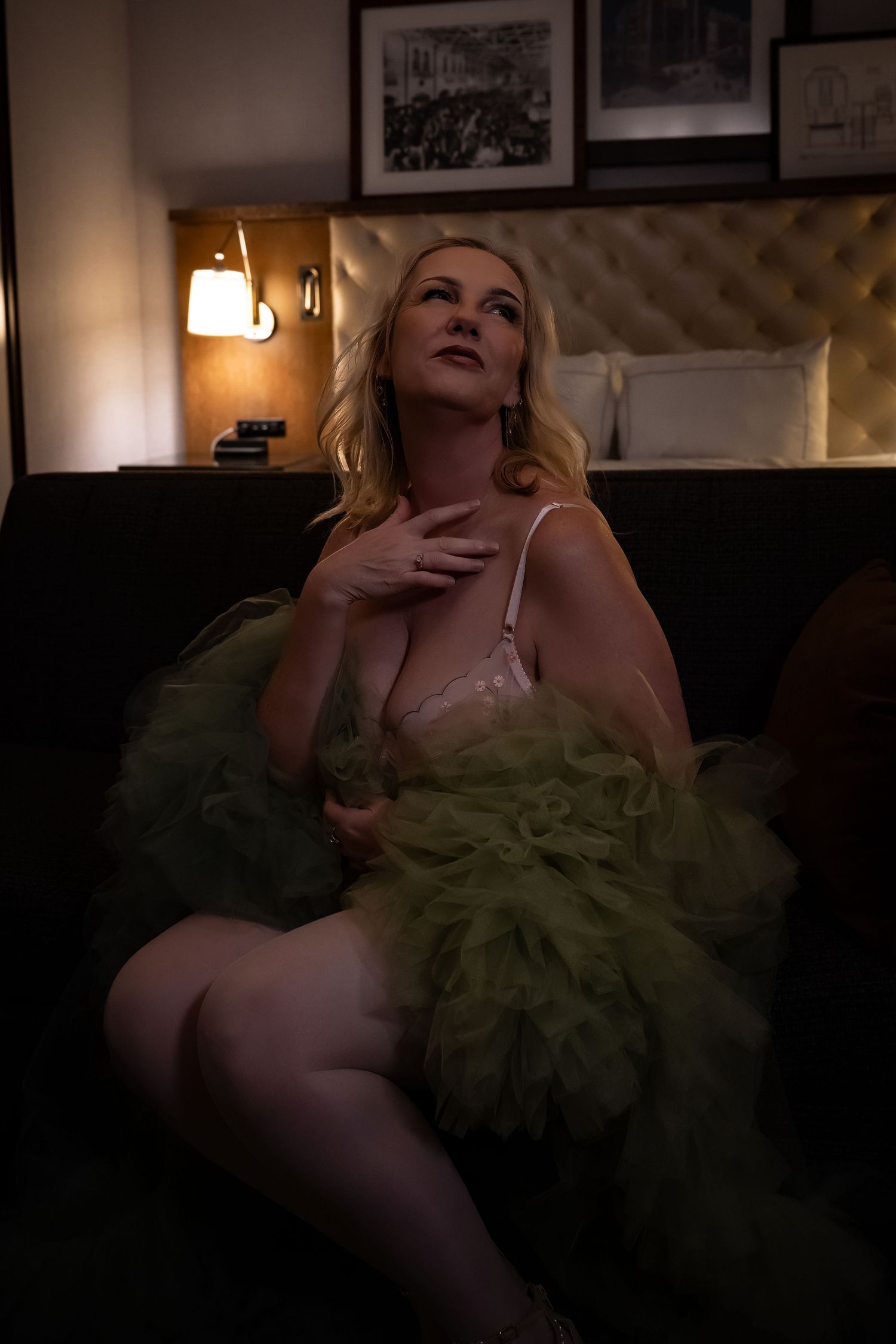
A boudoir portrait should feel like a beautiful recognition of yourself, not proof that you must become someone else. So, what does a boudoir photographer retouch? The honest answer is that thoughtful retouching refines the image while protecting the person in it. It is designed to preserve your expression, your character, and the details that make the portrait unmistakably yours.
At unButtoned x aap, editing is part of an intentionally guided, elevated experience. It is never about erasing a body or chasing a single definition of beauty. It is about creating artwork in which you can see yourself with clarity, confidence, and care.
What Does a Boudoir Photographer Retouch?
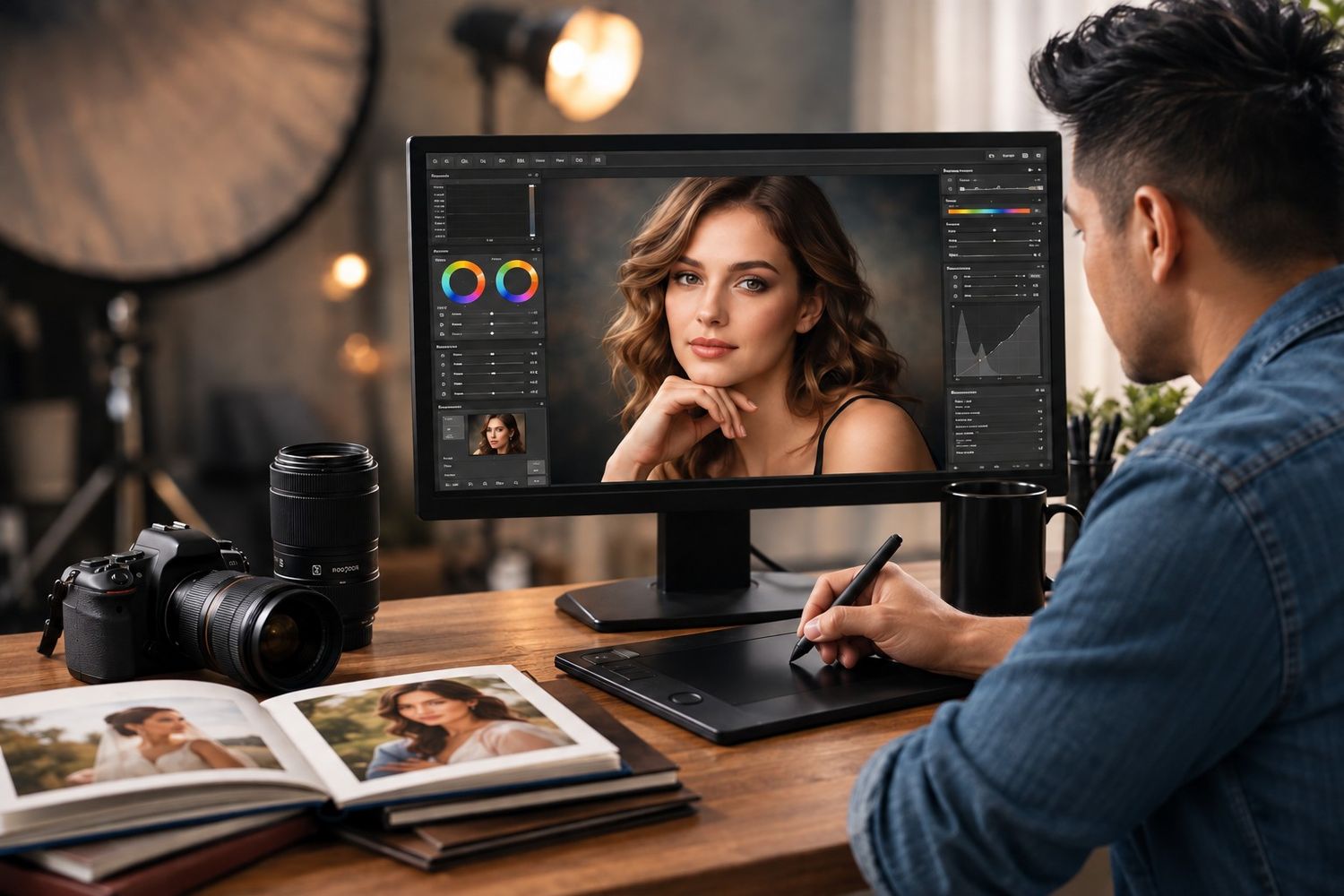
Most professional boudoir retouching begins with the elements that distract from an otherwise powerful photograph. A temporary blemish, a small bruise, stray hairs across the face, lint on lingerie, a creased sheet, or a distracting background detail can pull attention away from your eyes and the feeling of the image. Those are usually natural candidates for refinement.
A photographer may also make subtle adjustments to skin tone, overall color, exposure, and contrast so the final portraits have a polished, editorial finish. This kind of work creates consistency across your gallery and helps the light flatter the scene as it was intended to.
Retouching can include softening temporary under-eye darkness, minimizing redness, evening a tan line, or reducing the visual impact of a healing breakout. The goal is not perfectly textureless skin. Real skin has texture, and a beautiful portrait can hold onto that truth while still feeling luminous and finished.
Wardrobe and environment receive attention, too. A bra strap that shifted, a garment tag, a wrinkled backdrop, or an unintended crease in fabric may be corrected when it serves the final composition. These details matter, especially when an image is being designed as a fine-art luxury album or placed in a folio box you will return to for years.
What Thoughtful Editing Does Not Need to Erase
Boudoir photography is deeply personal, which means the right editing choices are not identical for every client. Some people want a scar, stretch marks, freckles, tattoos, or beauty marks left exactly as they are because they are part of their story. Others may ask for a particular feature to be softened in select images. Neither preference is wrong.
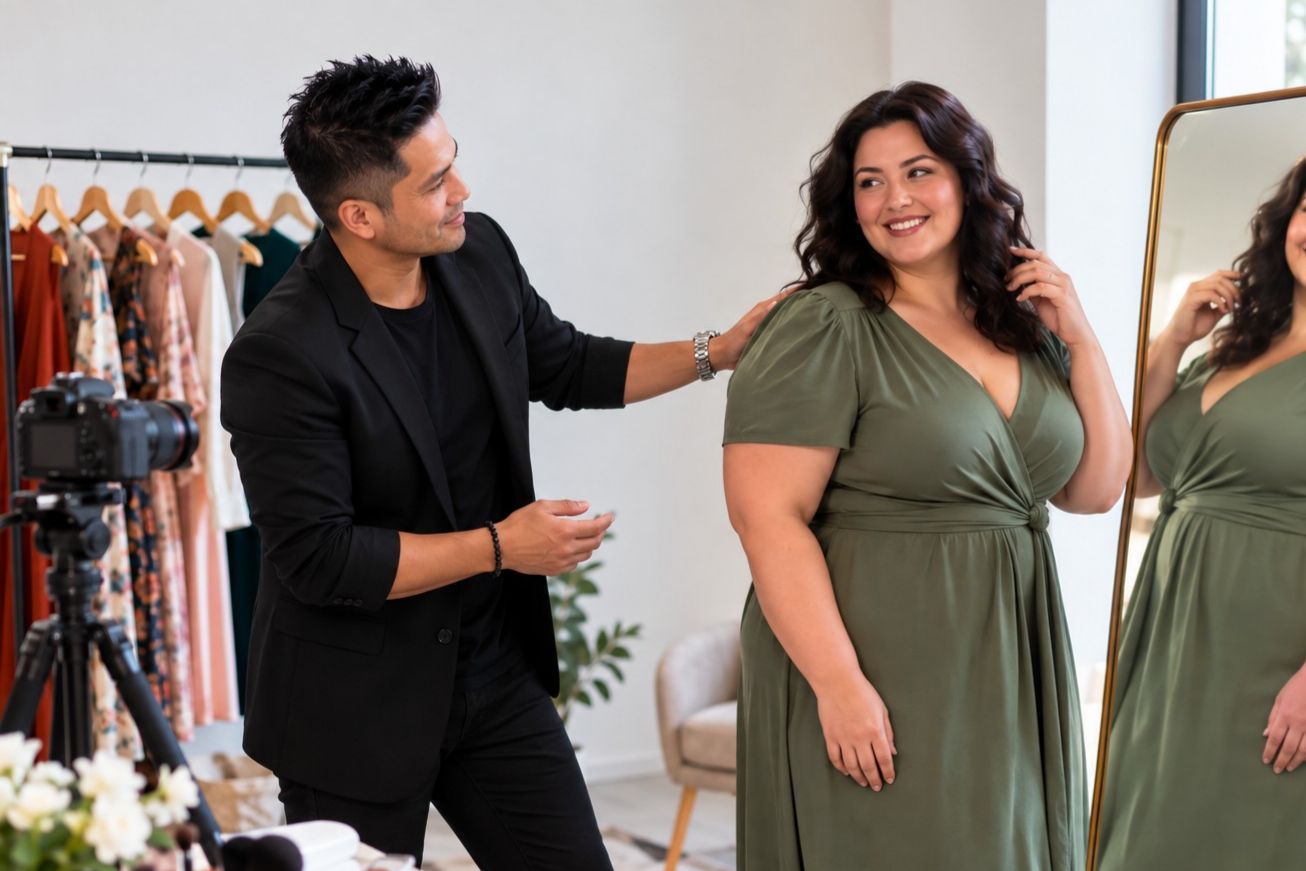
The most meaningful approach begins with consent and conversation. Your photographer should never assume that you want your waist reshaped, your limbs narrowed, your skin blurred beyond recognition, or your defining features removed. Significant body reshaping can create a portrait that feels unfamiliar when the moment calls for authenticity and self-expression.
That does not mean every image must remain untouched in every way. Editorial artistry often involves gentle shaping through posing, lighting, composition, and selective refinement. The distinction is intention. Is an adjustment helping the photograph feel polished and true to the vision, or is it asking you to disappear from your own portrait?
The Most Flattering Retouching Starts Before the Edit
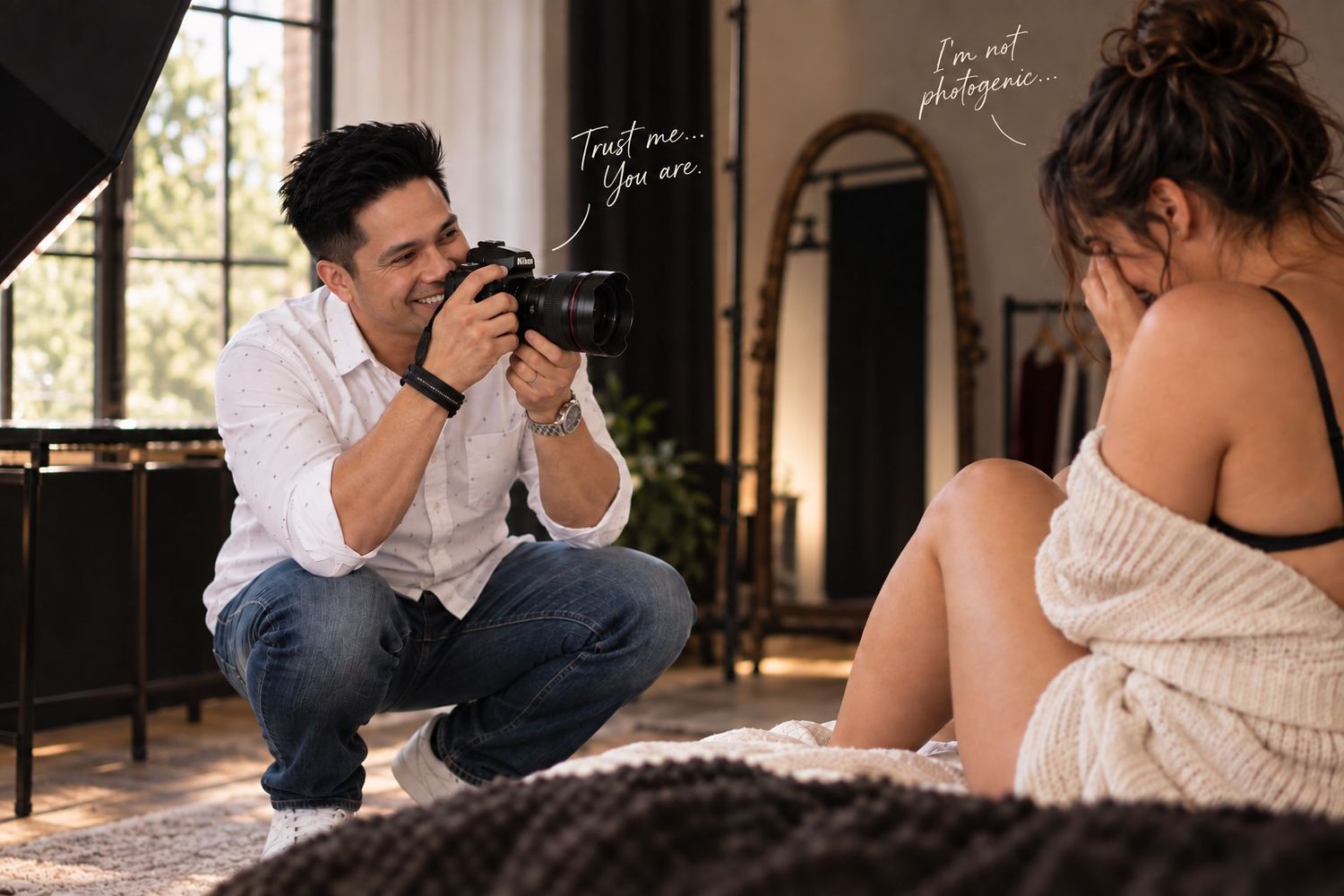
The most powerful boudoir images are not made on a computer. They begin with expert direction, considered styling, intentional lighting, and posing that honors the body in front of the camera. When you know where to place your hands, how to shift your weight, and where to direct your gaze, you do not have to carry the pressure of looking a certain way.
This is why a high-touch boudoir experience matters. A well-directed session creates flattering lines and genuine emotion in camera, leaving retouching to refine rather than rescue. The resulting images feel more natural because the confidence in them was built in the room, not manufactured afterward.
Lighting also shapes the final mood. Soft light can celebrate skin and create a romantic, intimate feel. More directional light can bring drama, strength, and editorial definition. Both can be flattering, but they tell different stories. Your retouching should support that chosen visual language rather than flatten it.
How to Share Your Preferences
Before your session, consider the details that feel important to you. You may want temporary blemishes softened but your freckles preserved. You may prefer an image with a more sculpted editorial finish, or you may want minimal editing that keeps every detail visible. Sharing those preferences early gives your photographer a clear understanding of what will help you feel seen.
It can also be helpful to name anything you do not want altered. Perhaps a tattoo represents a chapter of your life, a scar reflects resilience, or your natural texture is part of what you are learning to celebrate. Your portraits should make room for those choices.
Boudoir retouching is at its best when you still recognize yourself, only with the distractions quieted and the artistry brought forward. The final image should not ask you to measure up to it. It should remind you that you were already worthy of being photographed beautifully.
Boudoir retouching | What does a boudoir photographer retouch? | How are boudoir photos edited? | Professional boudoir photo editing | Natural boudoir retouching | Editorial boudoir photography | Luxury boudoir photography | Authentic boudoir portraits | Body-positive boudoir photography | Boudoir photography without body reshaping | Natural skin retouching | Do boudoir photographers remove stretch marks? | Are scars removed from boudoir photos? | Can tattoos remain in boudoir portraits? | Can I request minimal retouching? | Will I still look like myself in boudoir photos? | Boudoir posing and lighting | Fine-art boudoir portraits | Private boudoir photography experience | Jefferson City boudoir photographer | Boudoir photography Jefferson City MO | Columbia MO boudoir photographer | Mid-Missouri boudoir photography | St. Louis boudoir photographer | Kansas City boudoir photography | unButtoned x ali almazar Photography