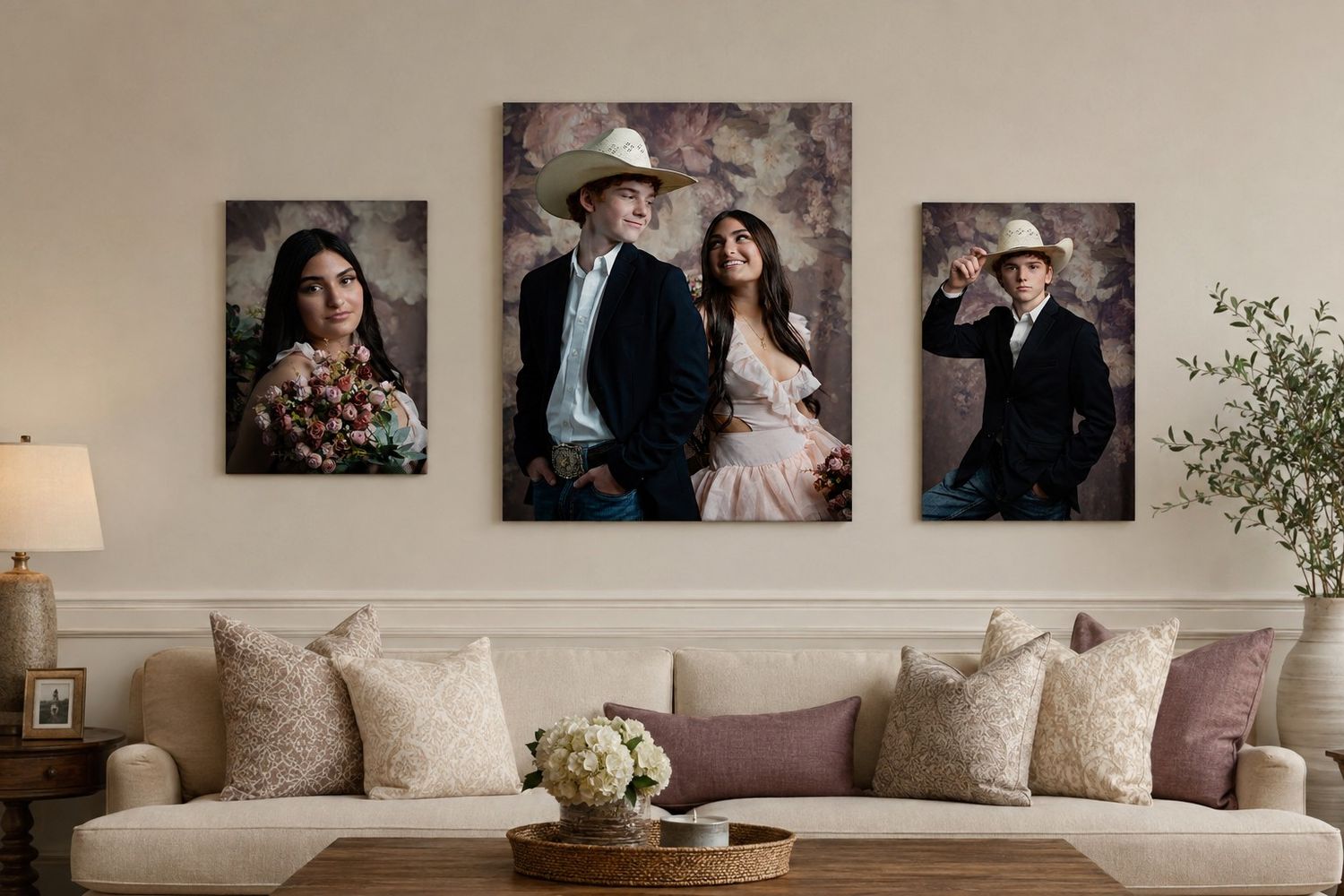

by: ali almazar | ali almazar photography
You love the photograph enough to picture it above the console. Then you imagine a friend walking in, looking up, and saying, "Oh, that's you." Suddenly you're having a whole debate with yourself about where to put a picture frame.
I'd hang it. And if the spot above the console makes you hesitate, let's figure out where you'd actually enjoy seeing it.
Why It Can Feel Awkward at First
A framed portrait of your grandfather in the tie he wore twice a year looks right at home next to the school pictures. Most of us grew up with some version of that wall. Putting up a solo portrait of yourself feels more deliberate. You're the one who picked the photograph and decided it deserved the space.
I'd ask what you liked about it before you started thinking about who else might see it. Maybe it's the way your shoulders dropped once you settled in, or how good you looked in the jacket you finally had an excuse to wear. I'd give that first reaction some weight.
Think About What You Want to Keep
You might be marking the year you finished your degree or opened a business. For a fitness portrait, I might light you from the side to show the definition you've been working on for months. And sometimes your first thought when you see the finished photograph is simply, "I look really good." That's plenty of reason to print it.
For boudoir, I'd ask where you'd enjoy seeing the portrait and who you'd like to share it with. If it's for you or a partner, I might suggest a small frame near the mirror where you get ready. We can talk that through when we plan your unButtoned boudoir session.
In a home office, I'd choose a portrait that shows a little of the work you do. If you're a designer, that might be you leaning over a desk covered in fabric swatches. I'd happily frame that beside your sketchbooks. I've shared more branding photography examples that feel personal.
Choosing a Spot in a Shared Room
If the portrait is going in a room you share, talk about placement and scale with the people who use it. I'd tape up a piece of paper the size of the frame, then look at it together from where you'd normally sit. A large portrait can hold its own above the sofa. A smaller one might fit right in with the photographs and artwork you already have on the wall.
On a family gallery wall, I especially like seeing a solo portrait of the parent who usually takes the pictures. If you're always the one saying, "Everybody scoot in," I'd make room for a frame that's yours.
How I Plan a Portrait for the Wall
When I make a headshot, I'm thinking about the person meeting you for the first time on LinkedIn. For a portrait in your home, I think about what will catch your eye when you come around the corner. That's a conversation I like to have before I pick up the camera.
Tell me the print is going in a narrow spot beside the bookcase and I can compose it vertically from the start. In a room that already has a lot of color, we might keep the wardrobe simple and use the light to bring out the texture in your jacket. That kind of planning is part of how I approach editorial photography.
Give It a Spot and Live With It
If you have a wall in mind, show me a quick phone photo with the furniture in the frame. That gives us something to work from when we look through your finished photographs and talk about size and finish at your Reveal + Ordering Appointment.
You can also start with a small frame on the shelf you pass on your way to make coffee. Give it a week there and see how it feels. I've shared more ideas for choosing the size and frame in my guide to framed prints.
If the photograph feels like something you'd rather sit down with, I'd give it its own page in an album. You can come back to it when the house gets quiet.